
How to Introduce Kids to Tools Safely & Confidently
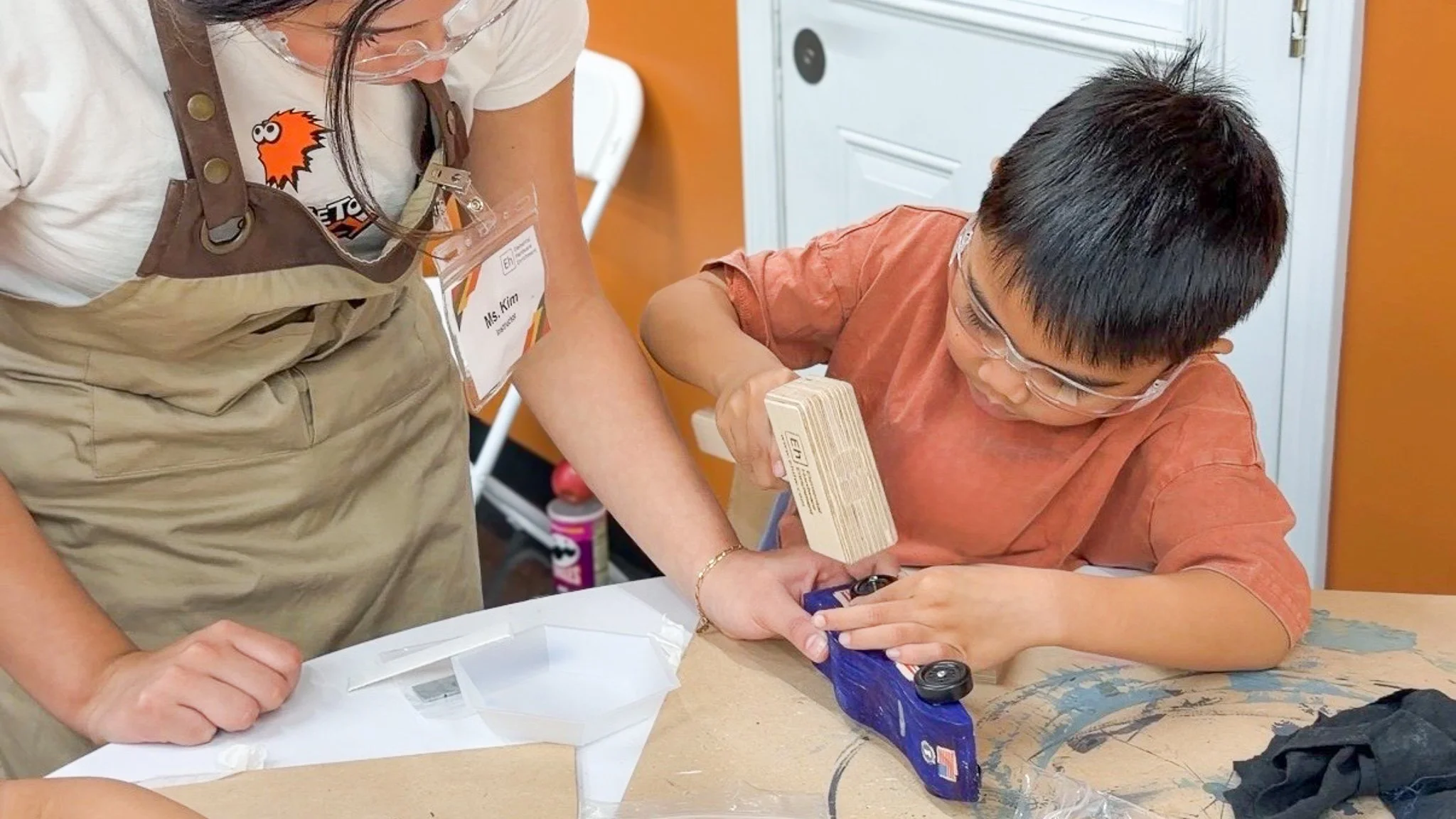
An eight year old with a hammer may seem like a disaster waiting to happen, but with the right guidance and safety, early exposure to tools can be a fun and empowering experience. Introducing kids to tools early on can result in more than just cool projects — it can boost confidence, problem-solving abilities, and a lifelong appreciation for building things. This hands-on learning fosters creativity and helps them develop essential, practical life skills.
A child might be curious about building and tools, or perhaps you want to demonstrate the vast potential that building skills offer. This guide is designed to walk you through introducing tools and woodworking to children with safety and confidence.
Materials Needed
To begin, you'll need the right tools. A lightweight hammer and a set of Phillips and flathead screwdrivers are excellent starting points. You can then gradually build the child's tool collection over time to keep from overwhelming them.
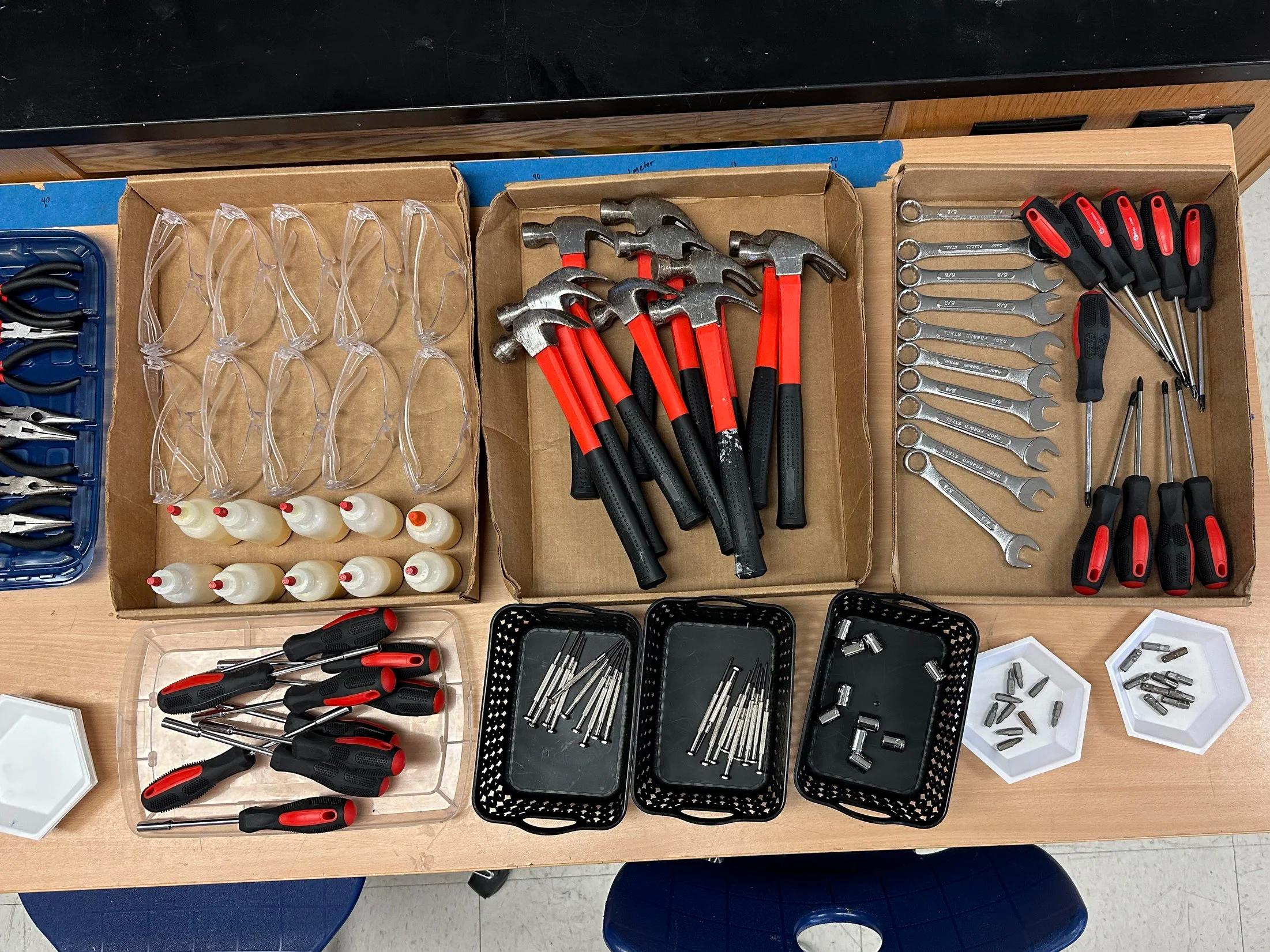
Getting the child their own toolbox can help with staying organized and can provide the child with agency over their tools. Additionally, protective gear such as safety glasses and gloves are a must when introducing tools and woodworking safety to kids.
Recommended Starter Kit Components:
Hammer
Screwdrivers
Nails
Screws
Toolbox
Safety glasses
Gloves
Safety First: Ground Rules
Before the child interacts with tools, you have to ensure they understand the rules and responsibilities of using them. Knowing the “why” behind these rules will help kids understand the reasoning behind it and hold them accountable to maintaining them. Establishing clear, non-negotiable ground rules is the cornerstone of safe and confident tool use, turning a potentially dangerous activity into a valuable, fun learning experience.
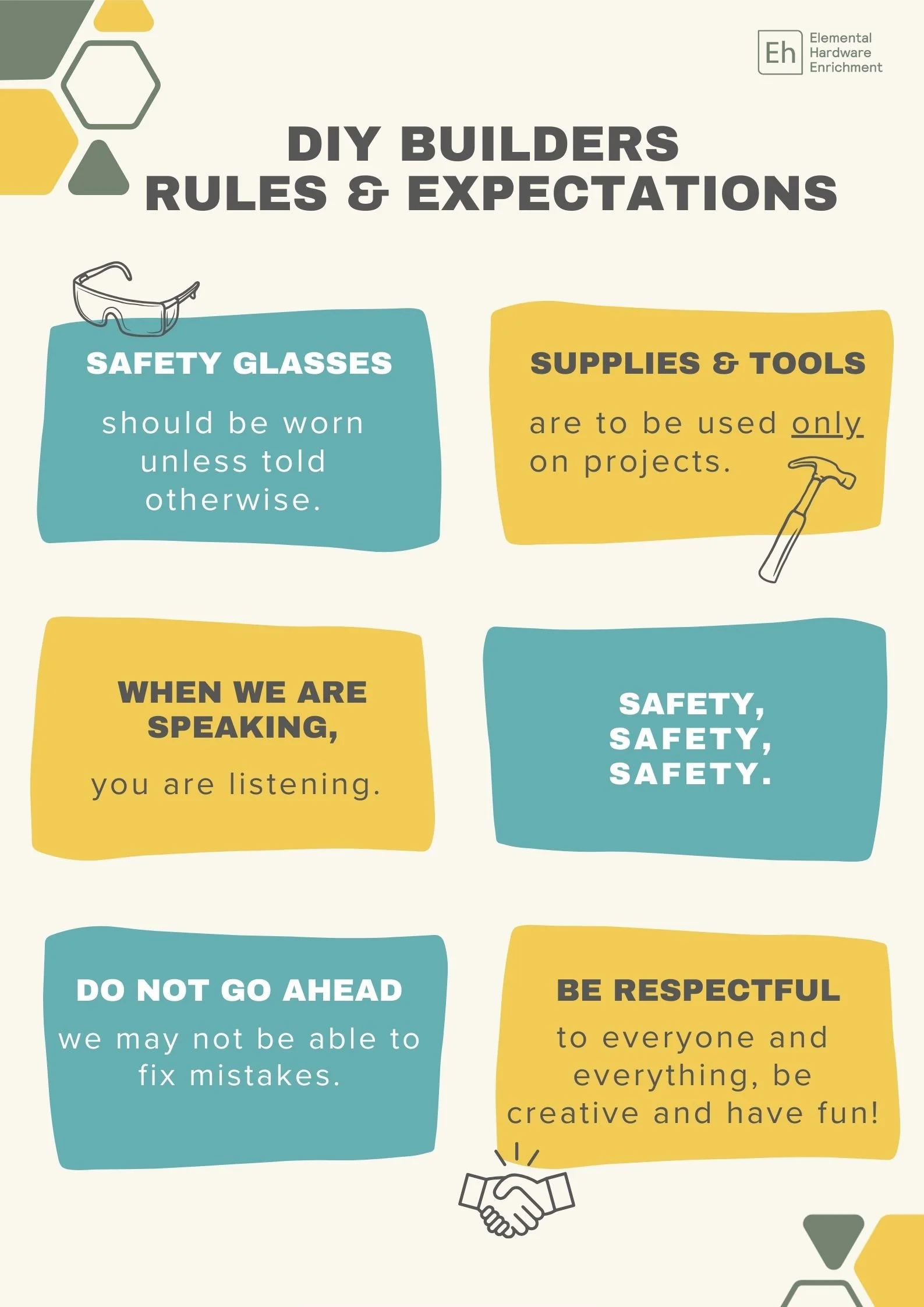
Some ground rules you must establish include:
Proper Attire: Explain the importance of wearing the correct safety equipment when working with tools. Safety glasses are non-negotiable and must be worn to protect the eyes from wood chips, sharp metal fragments, and fine dust. Gloves can be worn to protect hands from splinters, sharp edges, and provide a better grip, but ensure they fit well and won't get caught in moving parts. Most importantly, closed-toed shoes are mandatory. These will significantly reduce the risk of serious injury from dropped heavy tools, materials, or stray nails and screws.
Permission: the child must know that tools are not toys and should be treated with responsibility. Establish a rule that the child must always ask for permission before touching or handling any tool. This ensures that an adult can always supervise the child and ensure they are not attempting a task beyond their skill level or in an unsafe manner.
Supervision: Until a child has demonstrated consistent maturity, competence, and respect for the safety rules, they must work under direct and constant adult supervision. Even seemingly simple tasks can pose risks if the child gets distracted or forgets a rule. The supervisor should be close enough to intervene immediately if necessary and to offer guidance, instruction, and positive reinforcement. As they gain experience, the level of supervision can gradually be reduced, but the adult must always remain within the work area.
Intention: Every time a tool is picked up, the child must have a clear positive intention for its use. Tools are only for building, fixing, creating, or learning — never for horseplay, hitting things, or using them in a way they were not designed for. This rule helps teach focus and the importance of treating tools with responsibility. They must understand the purpose of each tool and how to use it for its intended function correctly.
Organization: A tidy workspace is a safe workspace. Teach the child that tools must be put away properly and immediately after they are finished using them. This includes cleaning them if necessary, storing them in their designated spot (like a toolbox, pegboard, or drawer), and ensuring the work surface is clean and clear of clutter. Leaving tools scattered on the floor or a bench is a tripping hazard and can lead to damage to the tool itself or injury. Instill a sense of ownership over the tools and the workspace, teaching them that maintenance and organization are part of the responsibility.
If you are looking for tools to set ground rules for using tools with children, check out this downloadable safety quiz!
Engaging all the Senses: Multi-modal Learning
When using tools with children, it is important to engage all of their senses by combining auditory, visual, and kinesthetic learning. “When students learn through multiple senses, their brains create stronger, more integrated memories,” explains Dr. Brian Mathias, a neuroscientist at the University of Aberdeen, in an excerpt from the school of psychology’s stories. This holistic approach ensures that different learning styles are accommodated for and that the instructions resonate.
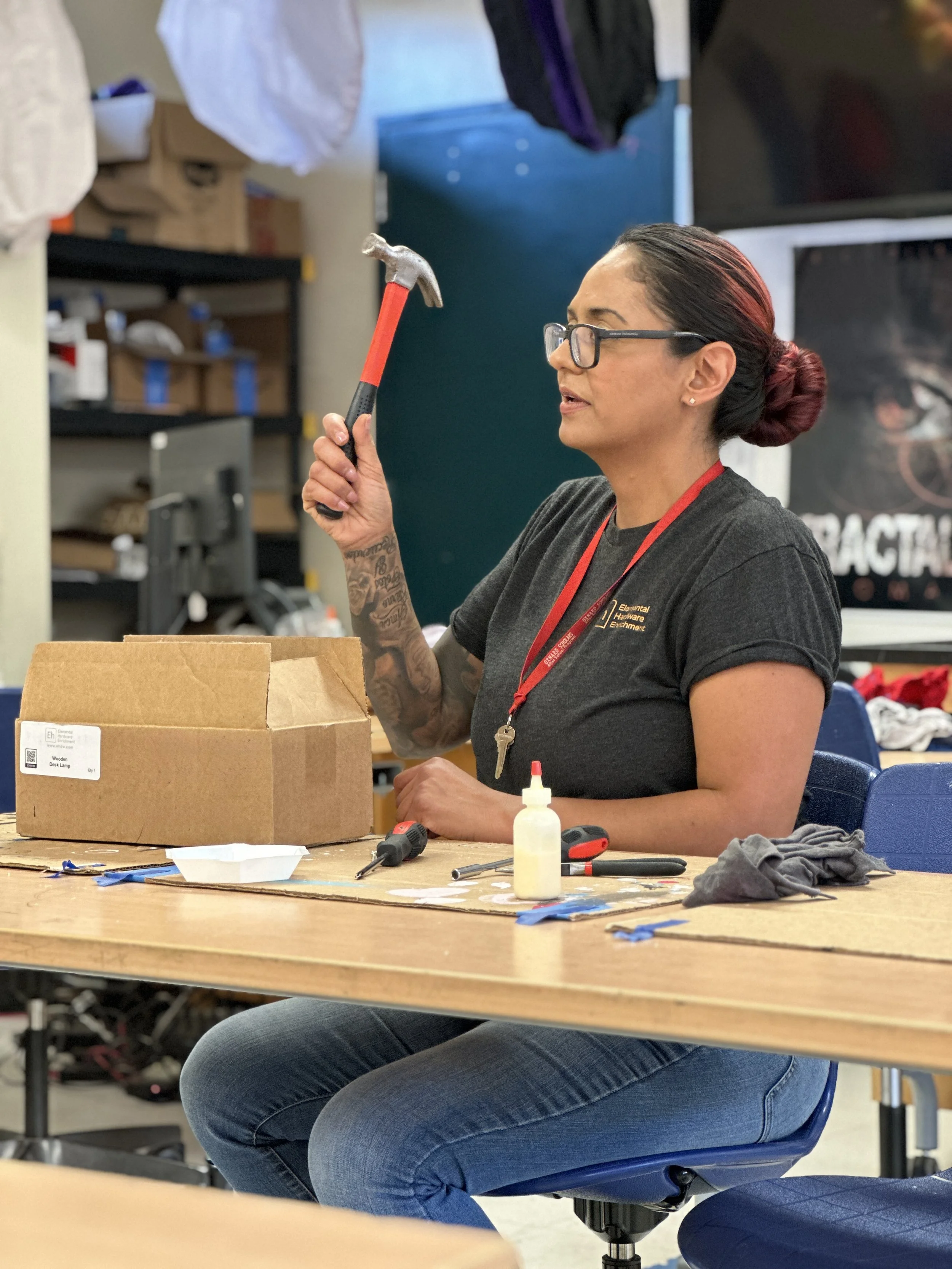
What this looks like in practice:
Auditory: This involves the language and the “telling” part of learning. You will want to clearly describe how to use a tool before you demonstrate it. Make sure to use accurate vocabulary and explain new definitions to the child. Have the child explain tool use or new vocabulary back to you to check for understanding. Auditory learning might also include pointing out sounds that indicate proper technique.
Visual: This focuses on modeling proper technique. Always demonstrate the correct, safe way to use the tool first, exaggerating movements and the grip so the child can easily imitate them. Show them the correct stance or body position for certain tasks, such as keeping arms uncrossed when hammering. You will also want to model the use of safety glasses, gloves, and any necessary safety equipment, further demonstrating to them that it is a non-negotiable part of tool use.
Kinesthetic: This is the hands-on component of learning, the most crucial part of building confidence. For younger children, this might look like more direct guidance where you place your hands over their hands to allow them to feel the motion and the weight. For older children, it might look like working side by side with their own tools. Provide plenty of opportunities for practice with age appropriate materials, repetition will build confidence.
Step by Step: Gradual, safe exposure
It is crucial to practice gradual exposure to tool use in children. If you rush the child into a task beyond their skill level, it can pose a safety risk and hinder their confidence.
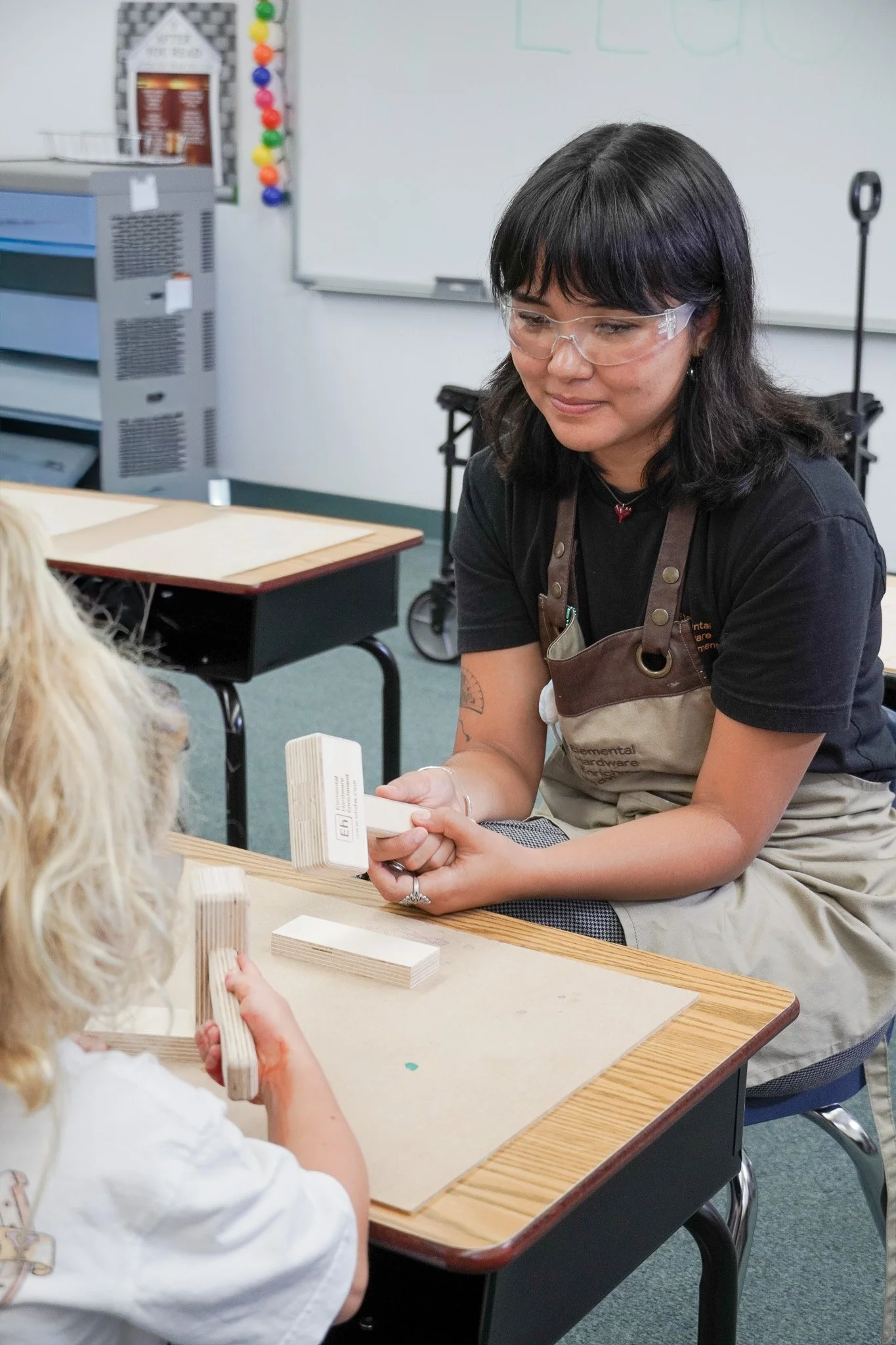
Age and developmentally-appropriate: The tools and tasks you introduce must align with the child’s developmental stage. A task perfect for a ten year old could be dangerous and frustrating for a four year old. Always evaluate the task in comparison to the child’s current abilities.
One step at a time: Overloading a child with too many new concepts and tools at once can be overwhelming. Introduce only one or two tools at a time. This allows the child to master the tool before moving on to the next task.
Opt for a safer alternative first: For younger children, before handing a child a full-sized, heavy hammer, consider starting with a safer, lighter alternative. A rubber mallet is an excellent introductory tool — it provides the same satisfying action and develops necessary motor skills, and is far less likely to cause injury or damage to surfaces.
Build confidence with easy wins: Confidence is built on positive experiences. Beginning with low risk tasks can create a fun learning environment. Some examples of low risk tasks include:
Hammering dowels into predrilled holes
Screwing into foam or drywall
Bending craft wire with pliers
By ensuring this gradual, safe exposure and focusing on achievable tasks, you can instill a sense of competence and maintain the child's natural enthusiasm for creation and construction.
Patience
It can be tempting to take over when children are using tools, but it is important to let them do the work themselves. Resisting this urge is crucial to the child’s learning process and developing confidence.
Instead of taking over, you can:
Model the skill again
Offer verbal coaching and advice
Embrace imperfection
Prompt the child with questions about how they think they could improve in the future
Giving children the space to learn and see what they are capable of will foster independence, problem-solving skills, and motor development.
Introducing children to tools is a rewarding process that goes far beyond simple project completion. By prioritizing safety through clear ground rules, using multimodal learning techniques, practicing gradual exposure, and fostering patience, you equip a child with valuable and practical life skills. This hands-on experience builds confidence, problem-solving abilities, and cultivates a lifelong passion for creation and building. Treat the introduction to tools as an opportunity for empowerment, turning a potential hazard into a cornerstone of their development.
Interested in introducing your kids to trade skills and tools? Our DIY Builders programs are led by skilled instructors who guide children through age-appropriate activities, emphasizing safe tool use and valuable life skills. Get in touch with us to learn more about how to participate!
