
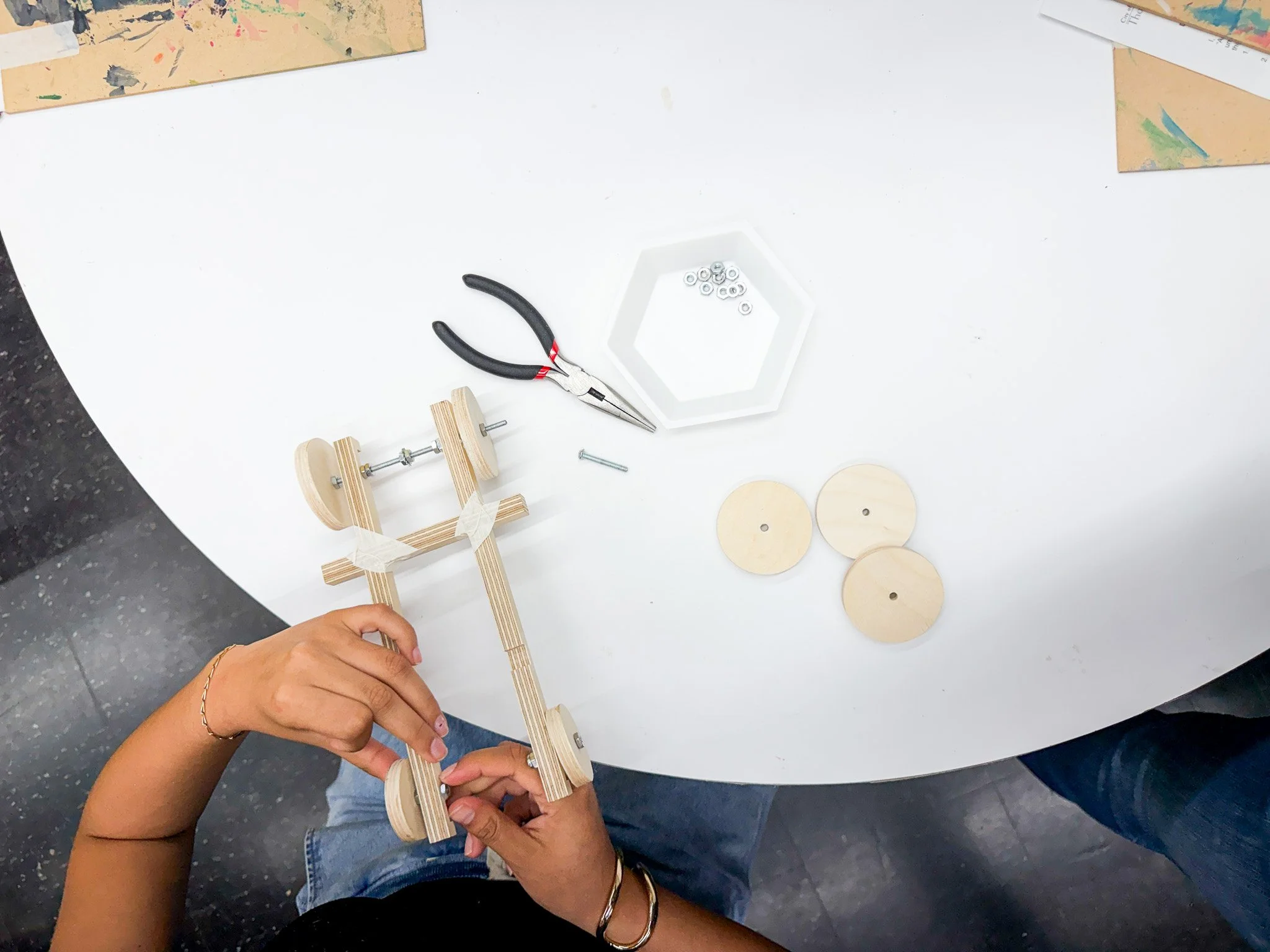
Rubber Band Car Challenge
Objective:
Build the furthest traveling vehicle using only a rubber band to convert stored energy into motion
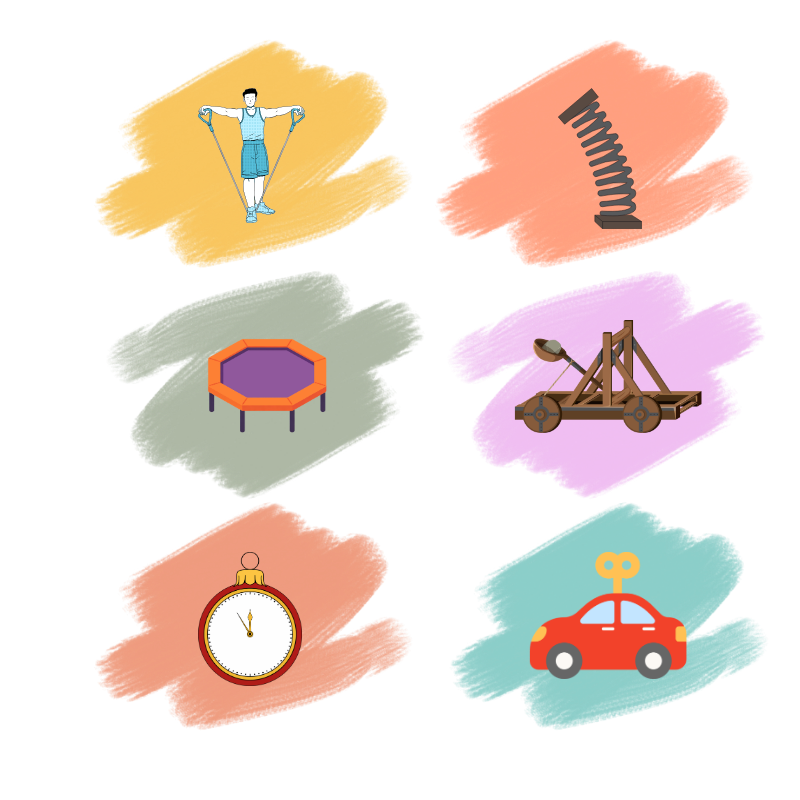
Real-World Connections
Rubber band-powered vehicles demonstrate stored potential energy being converted into kinetic energy to create motion. It may seem abstract, but we see examples of this everyday in objects like trampolines, wind-up toys, spring mechanisms in watches or clocks, and even exercise resistance bands.
In this challenge, students step into the real-world roles of engineers, designers, builders, and inspectors to:
Prototype vehicle designs and components that will propel forward
Experiment with wheel sizes, materials, and frame designs to reduce friction
Use needle nose pliers to adjust and tighten fasteners to construct vehicle axles
Observe cause and effect scenarios to improve designs through hands-on testing and iteration
Materials & Constraints
Students don’t get unlimited resources — just like real life. Each challenge is solved within a budget system where students choose from materials like:
Wooden studs (of various sizes and shapes)
Wooden wheels (of various sizes)
Fasteners (axles, hex nuts, string, rubber bands, pipe cleaner, and tape)
Creative elements (chipboard, paper, markers)
With each decision, students are learning to balance trade-offs between design, structural integrity, and resource-use.
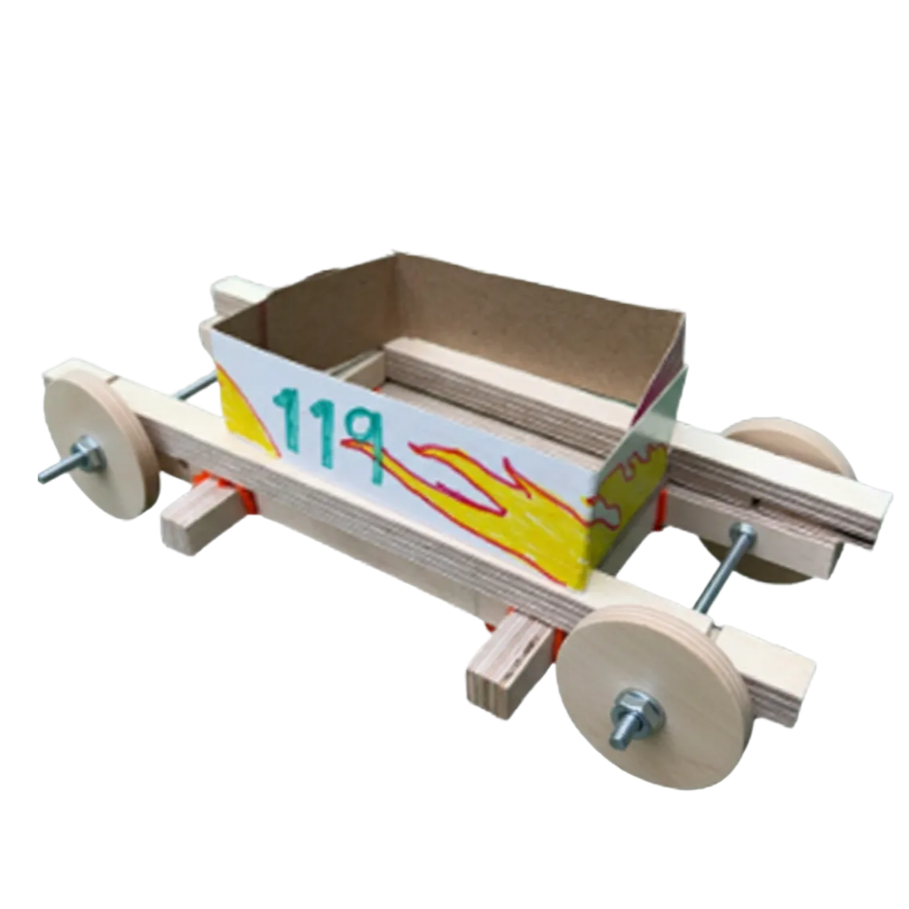
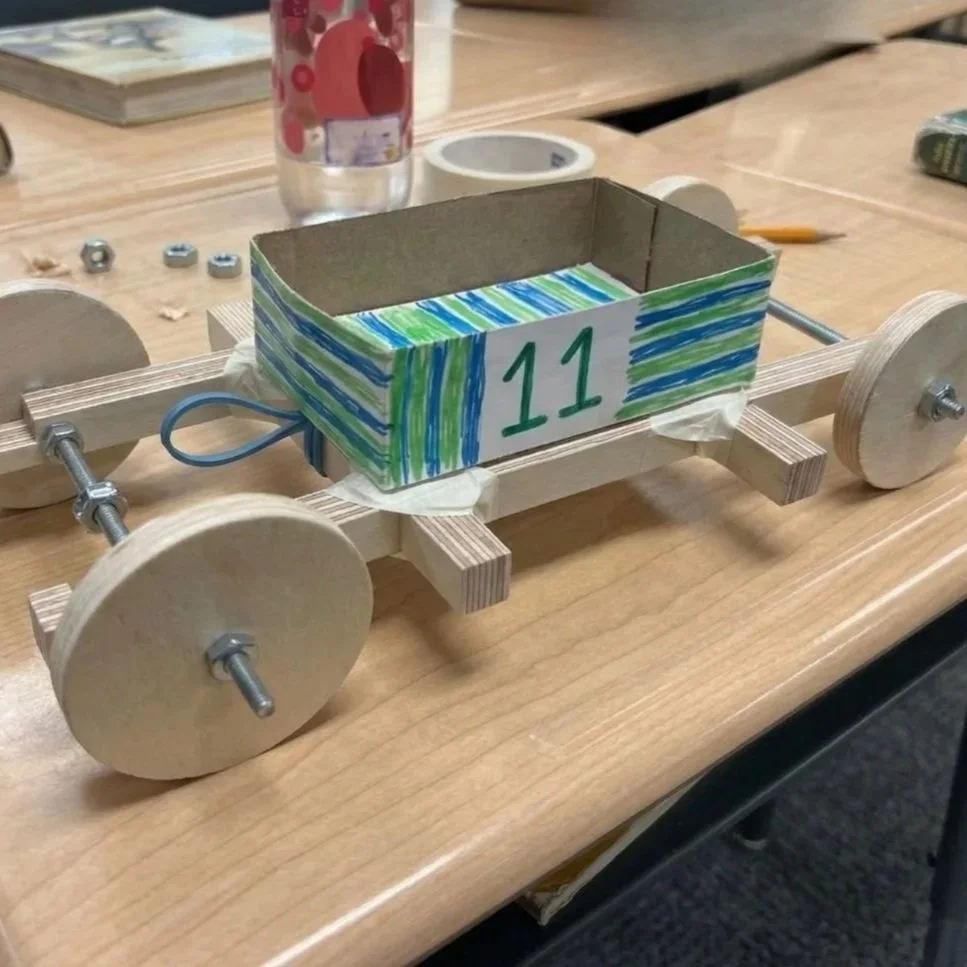
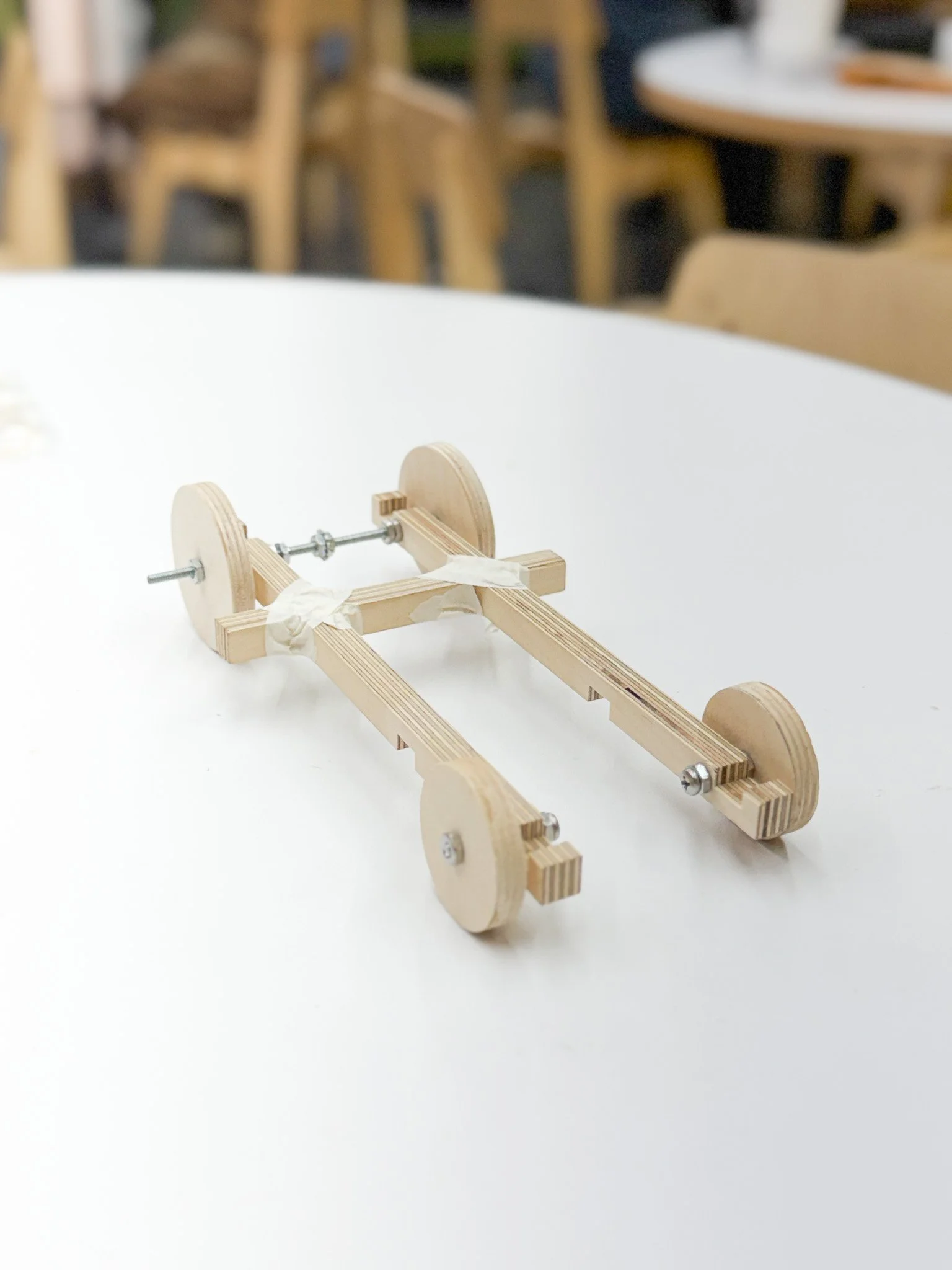
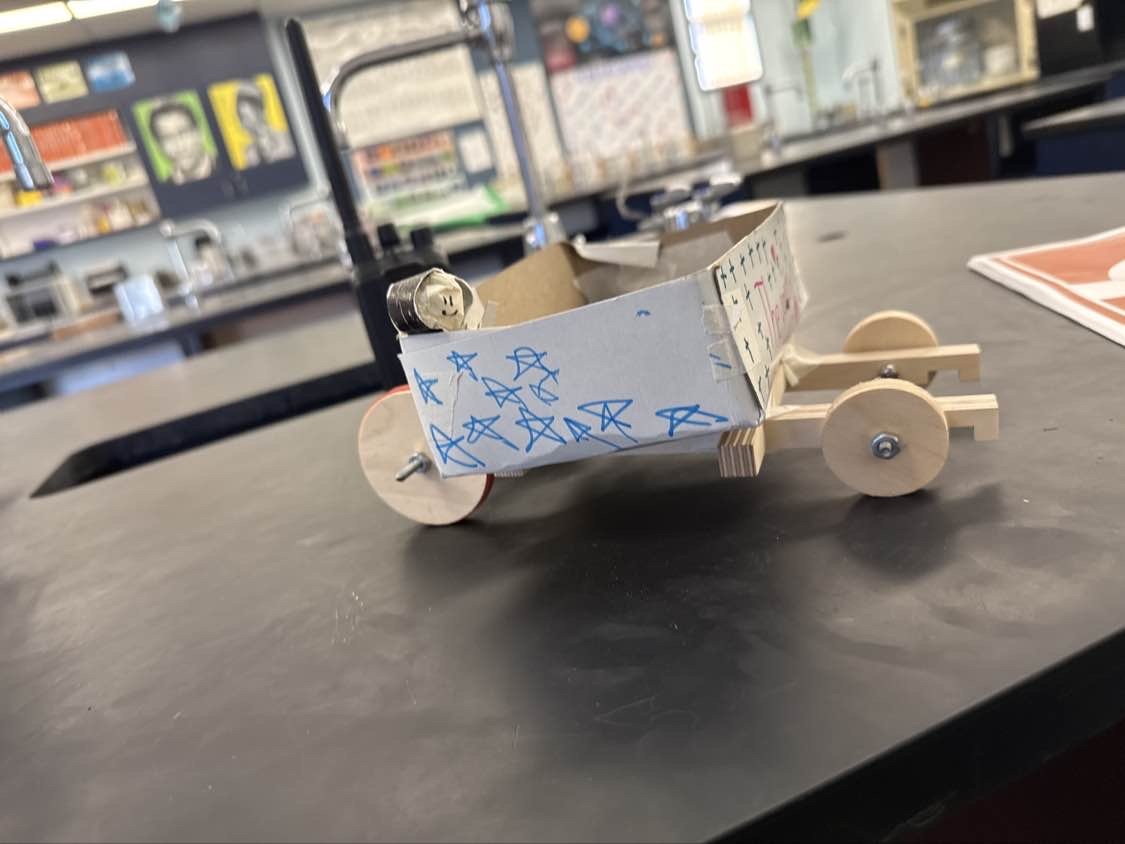
Example Solutions
Every solution is different. There is no single “right” build — only more effective solutions.
Challenge Format
Makers challenges are designed to be flexible and can be adapted to fit a variety of schedules, age groups, and program needs, including condensed pilot formats that deliver core experiences and measurable student outcomes in as little as 1 - 2 classes.
4 - 12 Classes
Program Duration
45 - 75 Minutes
Lesson Length
Gr 5 and Above
Typical Age Appropriateness
Curriculum Alignment
The Rubber Band Car Challenge supports hands-on learning across core academic and technical standards
Math - Measurement & Data
NGSS - Physical Science
ELA - Speaking & Listening
CTE - Engineering & Design
Ready to bring this challenge to your students?
Get in touch and we’ll help you customize a program that fits your schedule and age group.
Team Roles & Career Connections
Students take on defined roles within their teams so no one sits on the sidelines and every team operates like a real crew.
-
Leads the build strategy and guides the team’s decisions about resource-use and presenting and story-telling.
-
Constructs the design and makes real-time adjustments during the build to better meet the challenge’s requirements.
-
Plans aesthetic enhancements and creative elements in each challenge to balance form with function.
-
Tests for weak points in the team’s solution and evaluates against challenge requirements to recommend improvements.
What Students Take Away
Beyond the build, students develop skills that transfer across subjects and into real life.
Engineering & Technical Skills
Designing objects to store maximal potential energy
Propulsion and motion mechanics
Measurement & precision
Material & resource optimization
Critical Thinking Skills
Trade-off decision-making
Iteration & improvement
Cause-and-effect reasoning
Problem-solving under constraints
Collaboration
Communication
Shared ownership of outcomes
Resilience through testing and iteration
The Makers Process
Here’s a glimpse at what students actually do
-
![]()
Key Vocabulary & Engineering Concepts
Students build a shared language for the challenge and relevant engineering concepts by making real-world connections with their surroundings and personal experiences.
-
![]()
Concepts in Action
Students put these terms and concepts to the test through hands-on practice, building low-fidelity prototypes, testing their designs, and making adjustments through real-time feedback.
-
![]()
Explore & Design
Students begin exploring the challenge materials and experimenting with how they connect, balance, and support weight. Working individually or in small groups, students explore different combinations of materials to understand how they impact performance.
-
![]()
Plan & Build Strategy
Students use their new understanding of the materials (what works & what doesn’t) to plan their designs. With a limited amount of resources, students must make strategic decisions about which materials to use to best meet the challenge requirements.
-
![]()
Build & Iterate
Now in small groups, students bring their ideas to life by building and iterating on their solutions. As they test their designs against the challenge requirements, they identify weak points, make targeted improvements, and add in creative elements that reflect their team’s ideas and identity.
-
![]()
Present & Test
Students share their designs, the strategy behind their decisions, and how they improved their solution over time, oftentimes incorporating story-telling elements along the way. Then they put their build to the test — evaluating performance based on the challenge criteria.





Explore other Makers Challenges
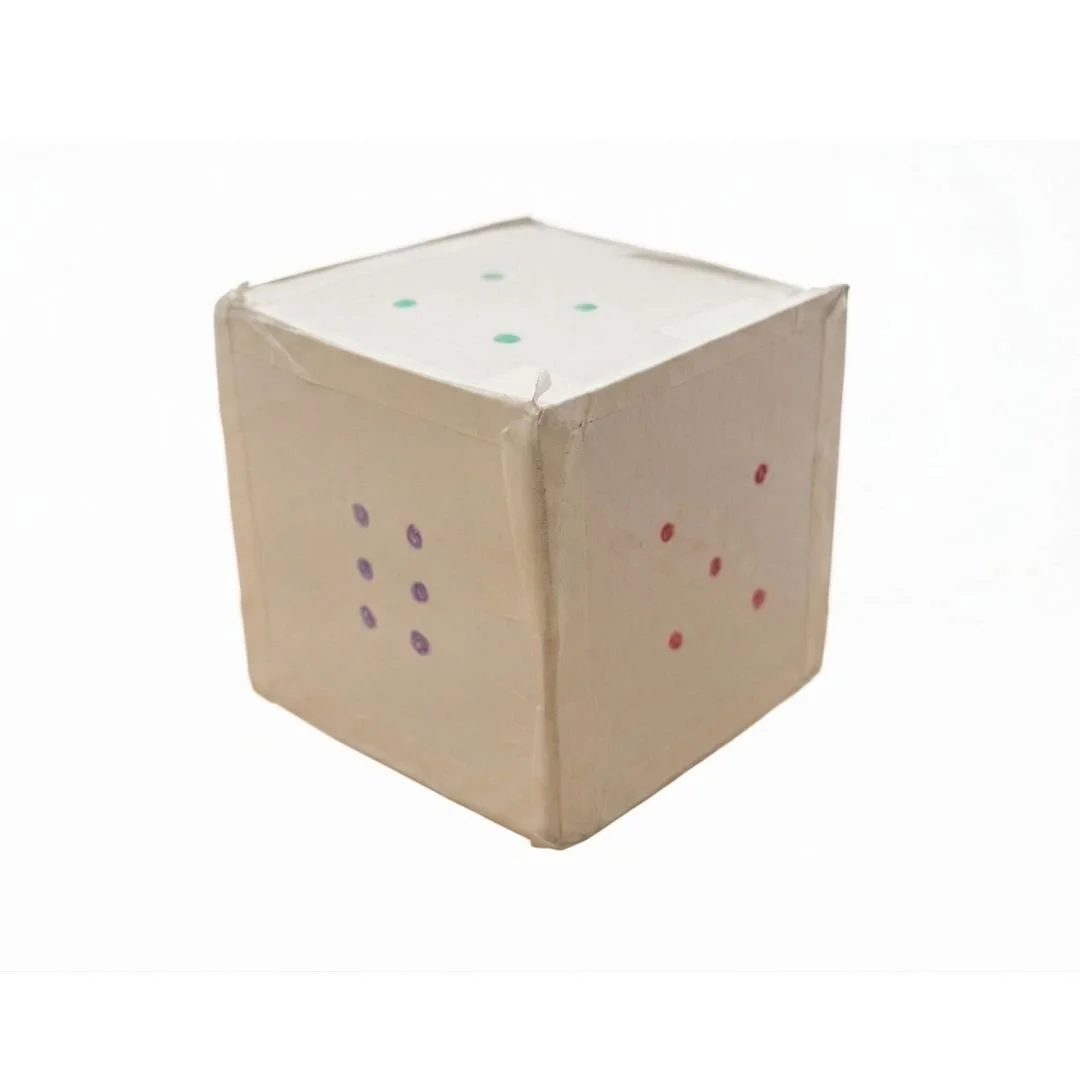
Shapes-to-Structures Challenge | Gr TK+
Turn 2D shapes into strong, standing 3D structures
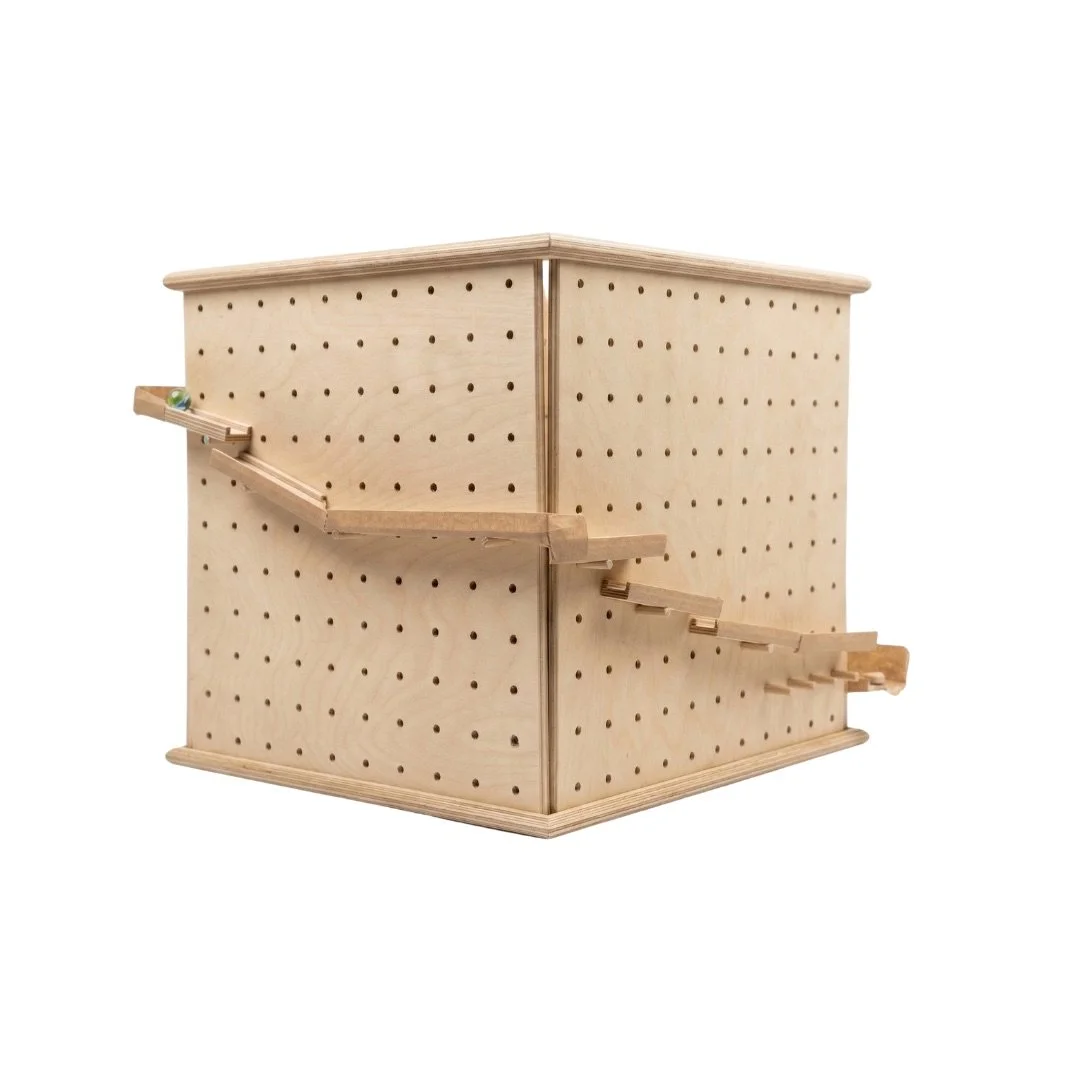
Marble Run Challenge | Gr 1+
Build a pathway system to control speed, momentum, and direction
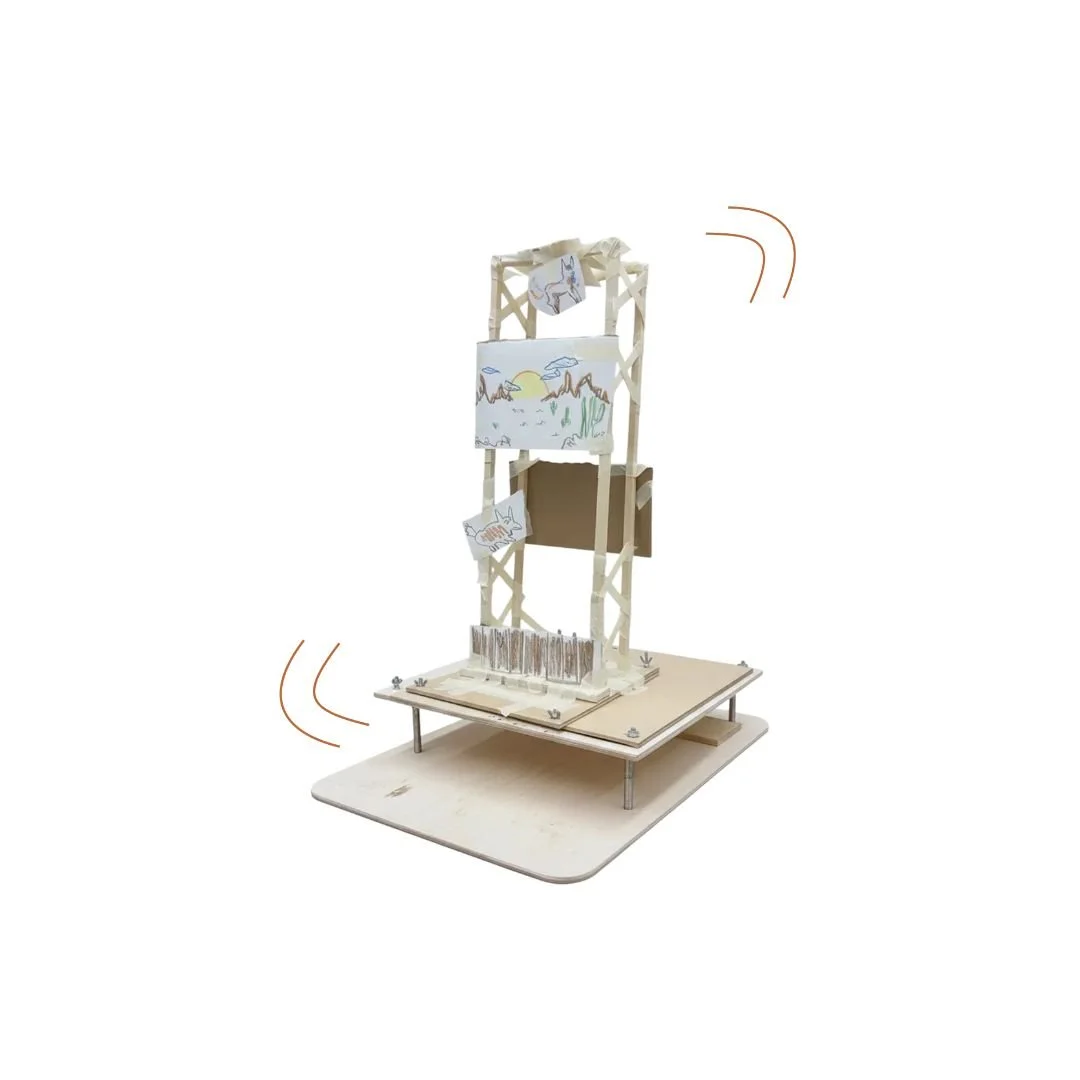
Earthquake Challenge | Gr 3+
Build a structure that can withstand simulated earthquakes
Bring the Makers Program to your school
Next steps:
Get in touch to schedule a call so we can discuss your needs
Customize a program with our team
Finalize a launch and evaluation plan
Our team manages all aspects of the implementation